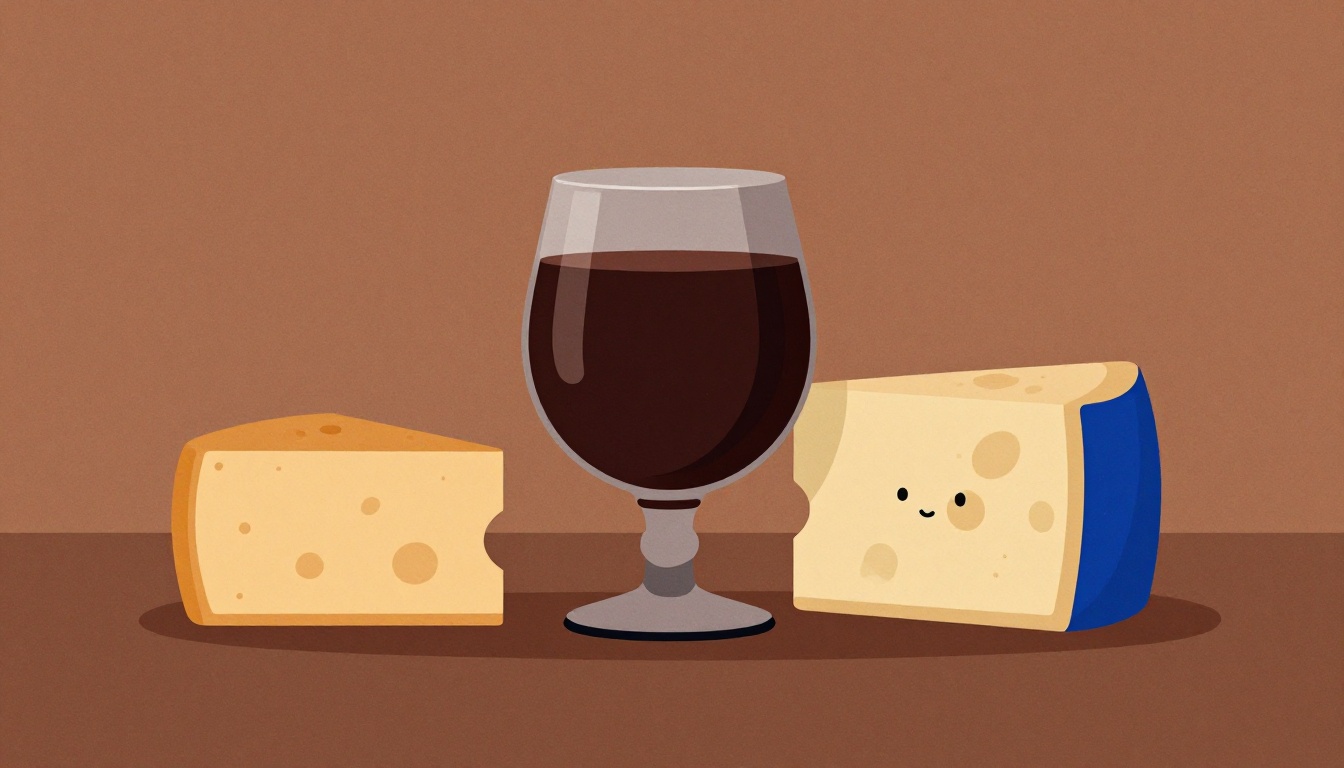
Belgian dubbels are dark, malty, and quietly sweet, which makes them tricky to pair: a delicate cheese disappears under them, while a too-aggressive cheese turns the beer cloying. The fix is a simple principle, not a rulebook.
According to the pairing guidance, which cheese is specifically cited as being enhanced by darker dubbels?
Select one answer.
Start with the two principles that actually matter
Most pairing advice reduces to two ideas. First, match intensity: a mild cheese needs a mild partner, and a bold cheese needs a beer that can stand up to it. As Wisconsin Cheese puts it, fresh cheeses "can easily be overwhelmed with a strong beer like a Belgian dark ale," while a punchy cheese "needs company that can handle its intensity" (Wisconsin Cheese).
Second, use carbonation as a tool. Beer's bubbles cut through the fatty, mouth-coating texture of cheese, which is why beer often outperforms wine at the cheese board (GootEssa). A dubbel's gentle, fine carbonation refreshes the palate between bites without scrubbing away the malt.
What a dubbel brings to the table
A dubbel is defined by its malt, not its hops: caramel, dried fruit, and gentle spice, with low bitterness. That flavor profile is the key to choosing cheese. Belgian Shop's pairing guide notes that with a dubbel or a dark, malty abbey-style beer, "caramel, dried fruit, and gentle spice in the beer soften the cheese's savory" character (Belgian Shop).
In practice, that means you want cheeses that are either equally rich or pleasantly salty and funky — not thin, bright, and acidic.
Pairings that work, and why
- Herve or another washed-rind, savory cheese. The classic Belgian match. The dubbel's malt sweetness rounds off the rind's funk instead of fighting it.
- Aged cheddar. The crumbly, sharp bite of an aged cheddar stands up to a dubbel's sweetness and spice (GootEssa).
- Brie. A soft, buttery bloomy rind is rich enough to meet the malt without being overwhelmed; darker dubbels are specifically cited as enhancing Brie (Bruz Beers).
- Gorgonzola or Roquefort. Blue cheese is the boldest option here. The beer's sweetness and carbonation balance the salt and cream — the same logic that makes malty dark beers work with blue (Bruz Beers).
- Smoked cheddar. Smoke and dark malt read as complementary rather than competing.
What to avoid
Skip very mild, delicate cheeses — fresh burrata, mozzarella, young chèvre — unless you want the dubbel to steamroll them. Also avoid pairing a dubbel with a cheese that has identical, obvious flavors; the combination flattens instead of building. And serve the cheese cool-to-room temperature, not cold, so you can actually taste it (Brew Your Own).
A practical tasting checklist
- Pick three cheeses of increasing intensity — for example Brie, aged cheddar, Gorgonzola.
- Chill the dubbel to cellar temperature, roughly 50–55°F, so the malt aromatics open up.
- Pull the cheese 30–60 minutes ahead so it comes up to room temperature.
- Taste light to bold: Brie first, then cheddar, then blue.
- Take a sip after each bite and notice whether the carbonation resets your palate.
- Add neutral accompaniments — plain baguette, pear, a few walnuts — and keep mustard and strong pickles away from the milder cheeses.
- Note what worked so you can rebuild the board next time.
Quick reference
| Cheese | Why it works |
|---|---|
| Herve (washed rind) | Malt sweetness softens the savory funk |
| Aged cheddar | Sharp, crumbly bite meets malt spice |
| Brie | Rich enough to match, soft enough not to clash |
| Gorgonzola / Roquefort | Salt and cream balanced by sweetness and bubbles |
| Smoked cheddar | Smoke echoes dark malt |
How the Featured Expert Can Help
Goshen Beverage is a West Chester, PA-based beer distributor serving West Chester and Exton, carrying local, American craft, domestic, and imported beers plus kegs for home and office delivery. They stock over 1,000 beverages, host monthly sampling events, and offer an Insiders Club. If you want help choosing a dubbel or building a cheese-and-beer board, visit goshenbeverage.com.