
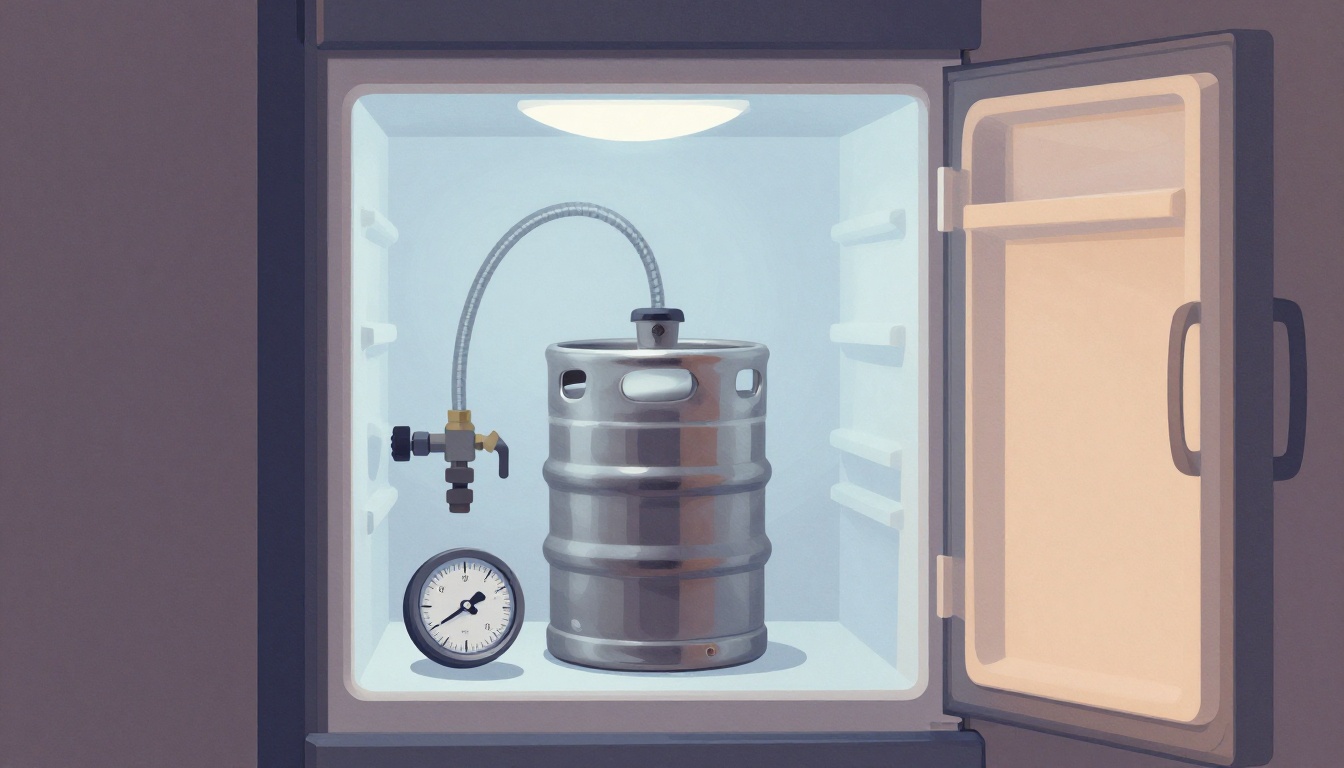
What is the optimum serving temperature range for most cold draft beer?
Select one answer.
Why draft beer goes stale in a kegerator
A keg that pours flat, foamy, or cardboard-like usually isn't a bad keg — it's a storage and dispensing problem. Four things shorten the life of draft beer: temperature swings, oxygen exposure, dirty beer lines, and the wrong CO2 pressure. Fix those and a keg stays within its brewery-rated freshness window instead of turning sour weeks early.
Start with temperature: 34–38°F
Temperature is the single biggest lever. Beer can freeze at 28°F, and above 39°F the CO2 molecule expands, which makes pours foamy and drives carbonation out of solution. The optimum serving range for most cold beer is 34–38°F (Summit Appliance).
Unpasteurized beer needs the colder end of that range. Once non-pasteurized beer rises above 45°F, the dormant yeast and bacteria in it become active again and the beer can go through a second fermentation — that's the sour, buttery flavor you can't undo. Pasteurized beer is far less vulnerable to temperature change.
Practical steps:
- Set the kegerator thermostat and verify it with a separate thermometer in a glass of water inside the cabinet.
- Let a new keg settle and reach temperature for 6–8 hours before tapping (Cavalier Distributing).
- Keep the keg cold from the moment you bring it home; don't let it sit at room temperature for days first.
Keep oxygen out: use CO2, not a party pump
A kegerator dispenses with pressurized CO2, which pushes beer to the faucet while keeping oxygen out of the keg. A party pump does the opposite: air enters the keg as you pump, so a party-pump keg should generally be finished within 8–12 hours (BeverageCraft).
Oxygen is what dulls hop aroma and creates stale, cardboard-like flavors. To limit it:
- Dispense with CO2 or nitrogen only — never a hand pump — for anything you plan to drink over more than a day.
- Check that all coupler, line, and regulator connections are sealed so the system holds pressure.
- Don't open the keg or break the gas seal unnecessarily once it's tapped.
Set the right CO2 pressure
For a typical home direct-draw kegerator, the optimal regulator setting is generally 8–12 PSI, though it varies with line length and diameter, beer style, and temperature (Cavalier Distributing). Nitro beers are different: they need a nitro tank (75/25 "Guinness blend"), a nitro regulator, and a nitro faucet, with the regulator set higher, generally 25–30 PSI.
If a keg is overcarbonated, vent the head-space pressure and let the beer rest a few hours to reduce carbonation (Brew Your Own).
Clean the beer lines on a schedule
Dirty lines shorten keg life faster than time alone. Bacteria, yeast, and mold build up in the lines and can make beer foamy and off-tasting even when the keg itself is fresh. Beer lines should be cleaned and flushed after every keg or every few weeks, using chemicals specifically approved for beer line cleaning (Summit Appliance).
For most home setups, that means cleaning every 2–4 weeks, and weekly if the system sees heavy use (Beer Line Cleaning USA).
A basic cleaning routine:
- Turn off the CO2 at the cylinder and shut off the regulator.
- Detach the coupler from the keg and disconnect the CO2 line.
- Put the coupler and beer line in a bucket and remove the faucet from the shank.
- Pump approved cleaning solution through the lines, coupler, and faucet.
- Flush thoroughly with clean, cool water, then reassemble.
Wear gloves and eye protection, and never leave cleaning solution in a line anyone might pour from.
How long a keg actually stays fresh
Freshness starts at the brewery's fill date, not the day you tap it. As a working guide:
- Unpasteurized beer: about 45–60 days.
- Pasteurized beer: about 90–120 days or longer, depending on the brewery.
Once tapped, a common rule of thumb is to finish the keg within 30–45 days (Cavalier Distributing). Pasteurized beer can keep up to four months, or even six if you disconnect the beer and gas lines (Summit Appliance).
Quick freshness checklist
- Hold 34–38°F and verify with a separate thermometer.
- Let a new keg settle 6–8 hours before tapping.
- Dispense with CO2 or nitrogen, never a party pump.
- Set the regulator around 8–12 PSI for standard CO2 pours.
- Clean beer lines every 2–4 weeks, or after every keg.
- Track the brewery fill date and finish tapped kegs within 30–45 days.
How the Featured Expert Can Help
Goshen Beverage is a West Chester, PA-based beer distributor offering local, American craft, domestic, and imported beers, including kegs for home and office delivery. They also provide event supplies, monthly deals, and sampling events. If you need the right keg, coupler, or CO2 guidance for your kegerator, visit Goshen Beverage.