According to the mix-six guidance, what should you do first before picking any bottles?
Select one answer.
Start with the problem, not the shelf
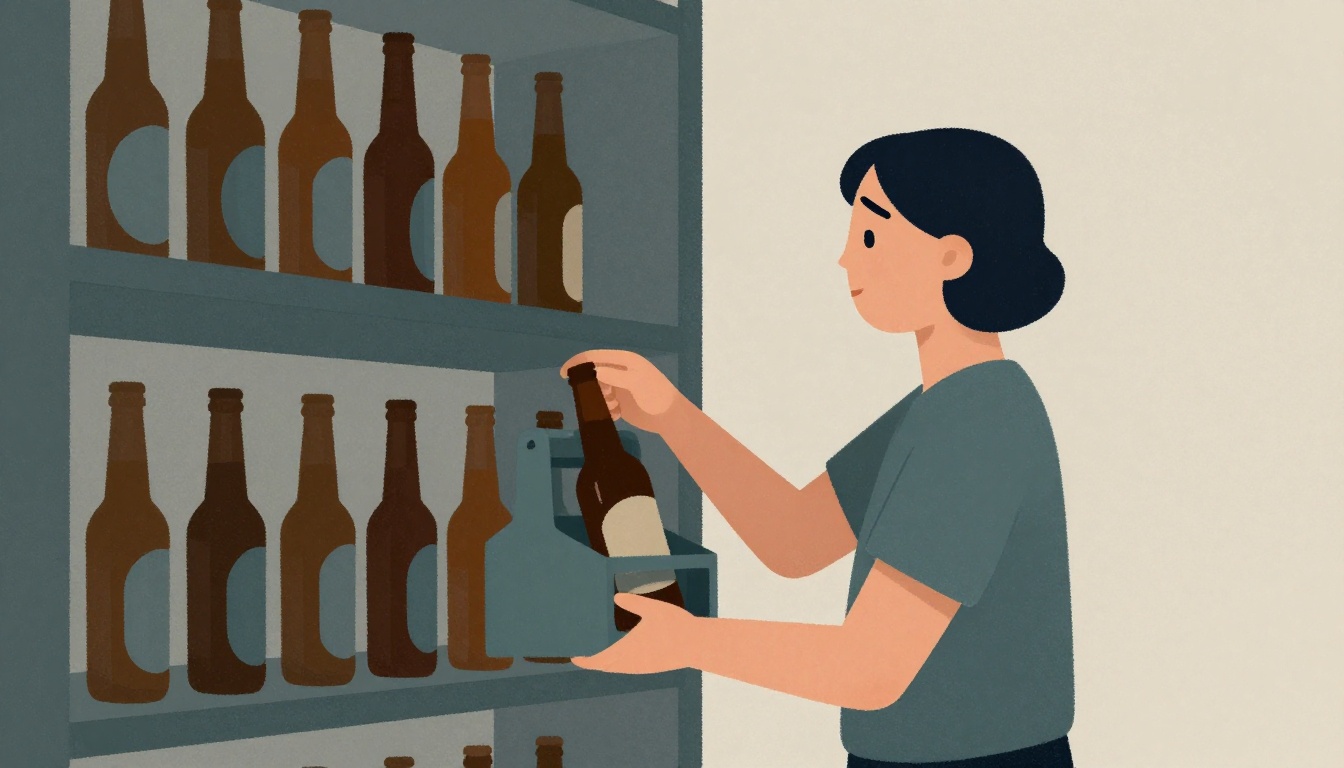
Standing in front of a wall of local craft singles with an empty six-bottle carrier is the hard part. Six slots, hundreds of labels, and no obvious logic for what goes in. The fix is to decide what the pack is for before you touch a bottle, then let each slot answer a question. That turns a guessing game into a short, repeatable process.
Step 1: Name the pack's purpose
The purpose changes every pick. Three common ones:
- A gathering. Lean on lower-alcohol crowd-pleasers — pilsners, wheat beers, session ales — and skip the barrel-aged monster nobody finishes.
- A quiet evening. Three or four bottles with real character beat six mild ones.
- Learning. You want contrast: beers that differ from each other on purpose, so you can taste the difference instead of guessing at it.
This framing comes straight from a practical mix-six checklist for curious drinkers, which treats the pack as a small, cheap experiment rather than a test of beer knowledge.
Step 2: Pick one anchor beer
Start with a bottle you already trust — the pilsner you drink every week, the IPA you had on draft last month. That is your anchor, the reference point everything else gets measured against. Then let the other five slots answer questions you are curious about. Does this brewery's stout hold up to the one you love? What does a saison taste like right next to a witbier? Is the hazy IPA everyone mentions actually different from a West Coast one?
Avoid the two extremes: six beers so similar they are redundant, or six beers so unrelated that nothing connects. A pack works best when each bottle has a reason for being there — even if the reason is simply "I have never heard of this."
Step 3: Pull four levers for real variety
Most style names are just combinations of four things. Learn the four and the wall of labels turns into a menu:
- Malt: pale and clean, toasted and biscuity, or dark and roasty.
- Hops: citrusy, piney, floral, or tropical.
- Yeast: clean lager fermentation versus fruity, spicy ale fermentation.
- Strength: session-level versus full-strength.
Change one lever at a time and you get a coherent pack. Change all four at once and you get chaos. The Brewers Association publishes detailed style guidelines if you want the formal definitions behind those levers.
Step 4: Check freshness before you commit
This is the step most shoppers skip. One experienced mixed-six builder noted that when they find beers they would love to combine, they often discover on closer inspection that the bottles are well past fresh. Hoppy styles fade fastest, so check date codes on IPAs and pale ales first. If a bottle has no readable date and it is a hop-forward style, treat that as a reason to pass.
Step 5: Know what you are paying for
Single bottles in a mix-six usually cost more per bottle than the same beer in a full six-pack. You are paying for variety, not for a bargain. Treat it as tuition. Some shops also run a small discount when you combine six singles — one grocery promotion offered 10% off when you build a six-pack — so it is worth asking at the register.
A quick checklist for the shelf
- Decide the pack's purpose before you pick anything.
- Choose one anchor beer you already trust.
- Fill the remaining slots with beers that differ on at least one lever.
- Check date codes on every hop-forward bottle.
- Skip anything that looks dusty or has no readable date.
- Ask whether the store discounts a full six of singles.
- Buy two packs if you cannot decide — you can always buy more.
That last point matters. As one beer writer put it, do not get so locked into picking the perfect six beers that no one else can pick theirs.
Why local matters for a mixed six
Local breweries are the best source for singles because their distribution is short and their stock turns over fast. A local-focused beer store also tends to carry a rotating mix of styles rather than the same national lineup year-round, which is exactly what a mixed six needs. If you are building the pack for a party, ask the staff what came in this week — fresh local arrivals are the strongest candidates for the anchor slot.
How the Featured Expert Can Help
Goshen Beverage is a West Chester, PA-based beer distributor offering a wide range of local, American craft, domestic, and imported beers, including kegs for home and office delivery. They provide event supplies, monthly deals, and sampling events, and position themselves as the largest beer store in the area. If you want help assembling a mixed six or planning a larger order, visit Goshen Beverage.
Test your knowledge
Before you head to the shelf, check one key point from this guide.
Question: According to the mix-six guidance, what should you do first before picking any bottles?
- A) Decide what the six-pack is for
- B) Grab the highest-ABV bottles available
- C) Buy six bottles of the same style
Correct answer: A) Decide what the six-pack is for.